Ravenna surprises visitors who come only for the mosaics: they arrive for UNESCO and discover one of Italy’s richest and least-known regional cuisines. Authentic Romagnola cooking — the kind made by the azdore, served in neighbourhood trattorias, built on artisan producers — is the city’s second invisible heritage. This guide covers what to eat in Ravenna, where to find genuine Romagnola dishes, and why the local gastronomy is worth a trip in its own right.
Romagnola cuisine: what to expect in Ravenna
Romagnola cuisine is often confused with Emilian cuisine, but they are two distinct traditions. Emilia is the land of Parma ham, Parmigiano Reggiano and green lasagne. Romagna is the land of piadina, cappelletti, Adriatic fish stew and native pork breeds. The border runs roughly along the Via Emilia. What you eat in Ravenna has little to do with what you eat in Bologna, even though both cities are in the same region.
The dishes you must not miss
Cappelletti romagnoli
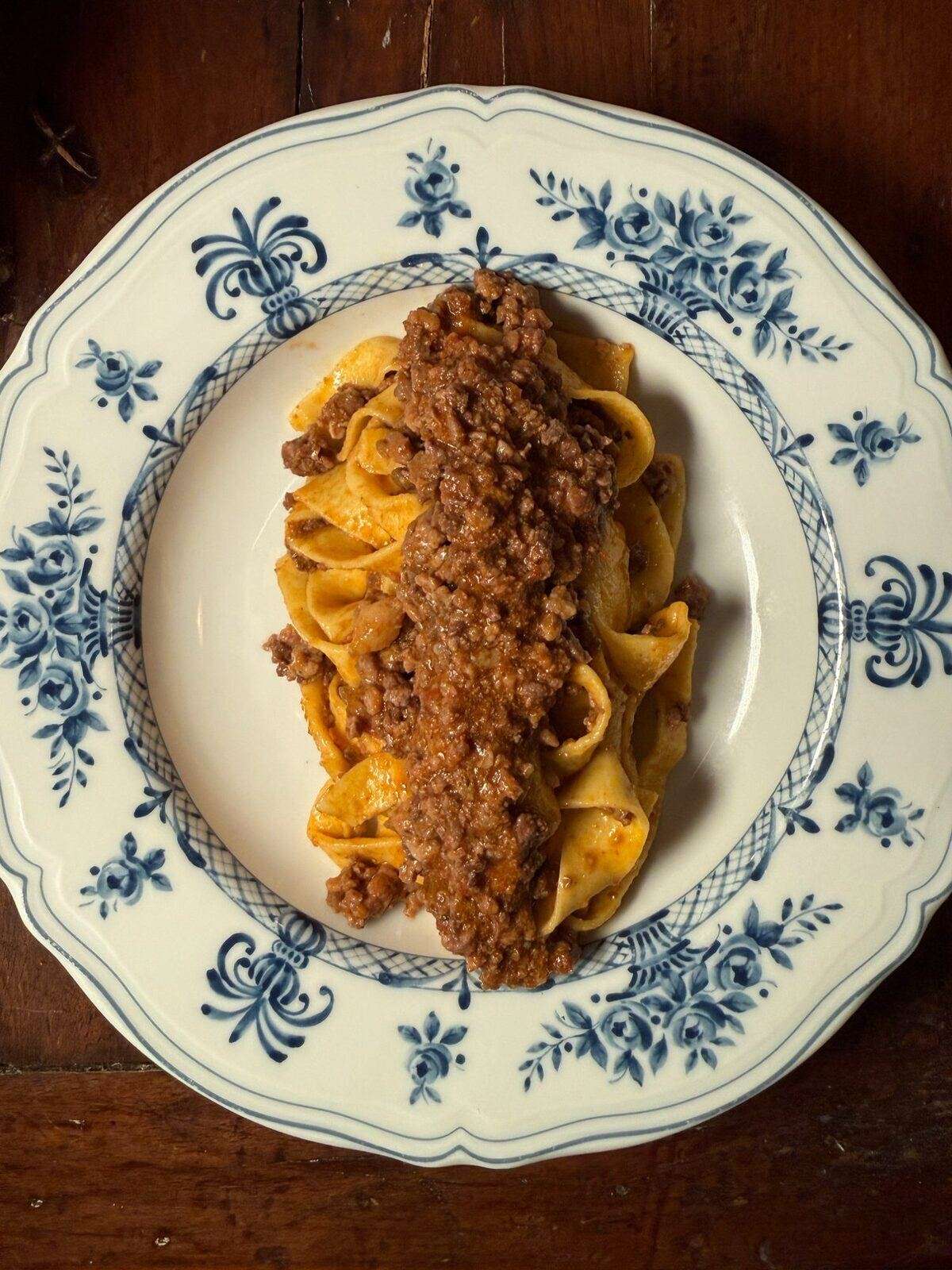
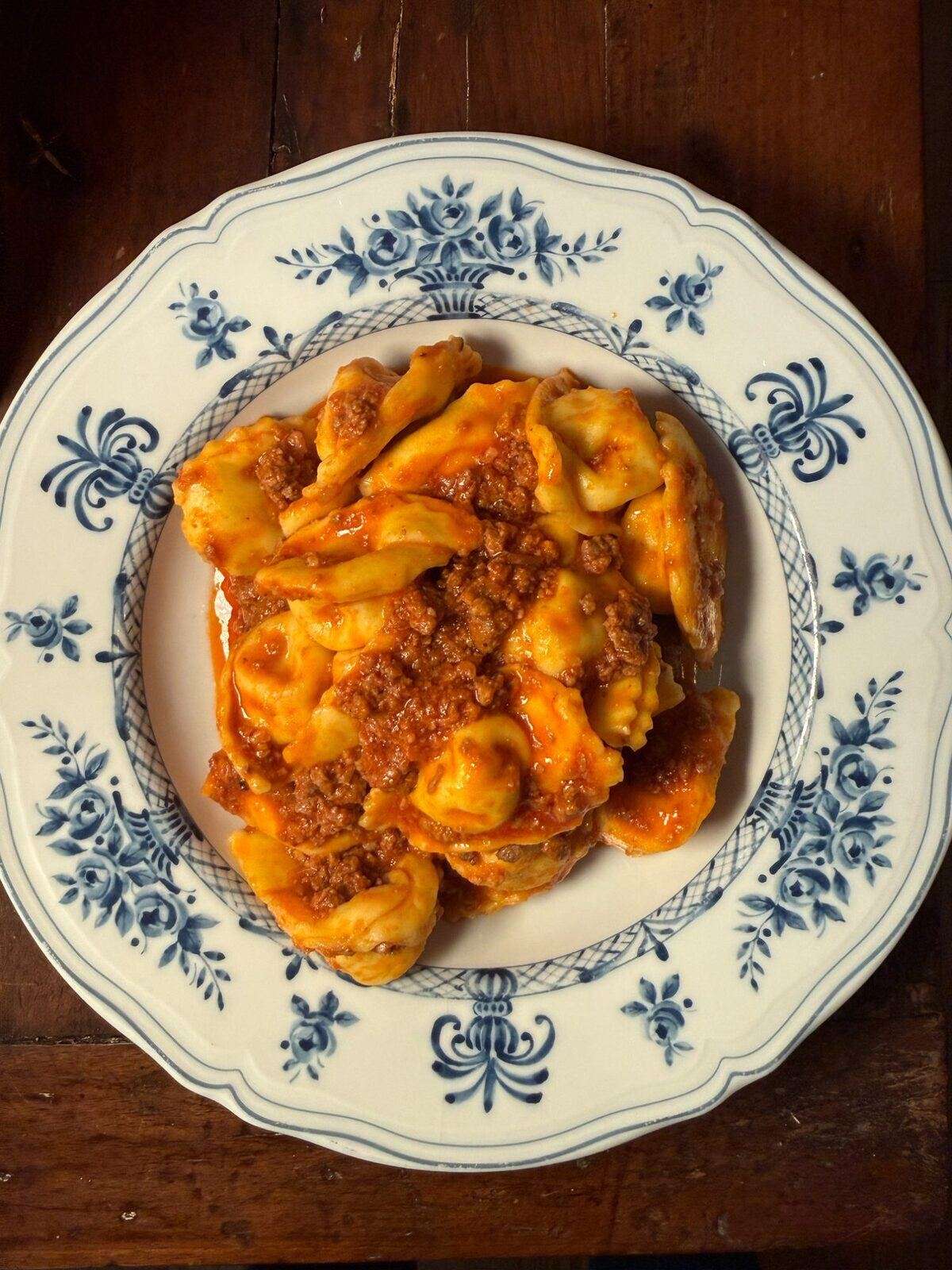
Cappelletti are the fresh pasta of Romagna. Different from Emilian tortellini — more open in shape, with a meat-based filling — they are made by hand every morning, then served either in broth or with ragù. At Osteria dalla Zabariona they are filled with Mora Romagnola — a native, nearly extinct pig breed — and dressed with a slow-cooked ragù. One of the dishes that best represents what this kitchen can do.
Passatelli in brodo
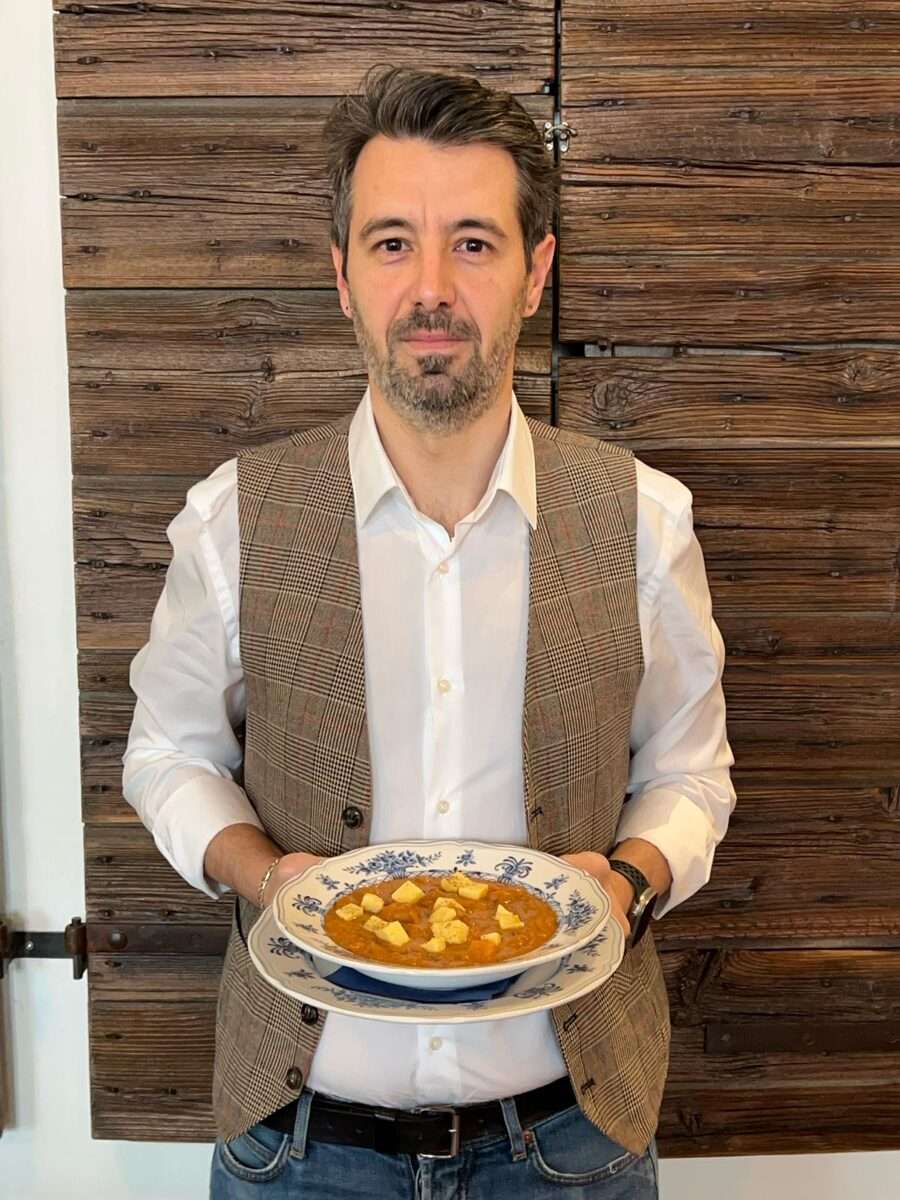
Passatelli are a pasta made from breadcrumbs, Parmigiano Reggiano and eggs, pressed through a special iron tool into a clear broth. The broth — at Zabariona made daily from paganelli, small Adriatic fish — is everything: rich, clean, with a depth that comes only from real slow cooking. Passatelli are a dish of Romagnola winter, humble in origin and extraordinary in result.
Sucialesta
Sucialesta is a nearly vanished dish of the Ravenna peasant tradition: polenta flour dumplings (gnocchi) with borlotti beans and Mora Romagnola lard. Recovered by Zabariona from the handwritten notebooks of local azdore, it is served exclusively here in Ravenna. Ordering it is a small act of culinary archaeology. The name comes from the Romagnola dialect.
Urciòn
The Urciòn (or Orcione) is a giant fresh pasta parcel stuffed with a lean filling — the Ravenna dialect name for a large tortello. Not to be confused with Emilian tortelloni: different shape, different filling, different origin. A seasonal first course at Zabariona, made by hand when the season allows.
Piadina romagnola
Piadina Romagnola IGP is the bread of Romagna: a flat bread made with wheat flour, lard and salt, cooked on a stone griddle. In Ravenna the version is thicker and softer than the thin, crispy Rimini style. The classic filling is squacquerone DOP — the region’s soft fresh cheese — with rocket. Piadina is not a snack or a starter: it is a meal, a daily ritual, an edible identity card.
Adriatic fish stew (brodetto)
The brodetto ravennate is a port dish: a stew of Adriatic fish with white wine vinegar, onion and tomato. The Ravenna version uses bottom-of-the-sea fish — scorpionfish, gurnard, weever, cuttlefish — and is distinguished from the Rimini or Ancona versions by its vinegar balance, which cuts through the fat of the fish with a clean acidity. It is eaten at a wooden table, bread at hand, ideally at lunch on a cold day.
The wines of Romagna
The wines of Romagna are a chapter in their own right. The main native varieties are Sangiovese di Romagna (red, fruitier and less tannic than its Tuscan cousin), Albana DOCG (white, Italy’s first-ever DOCG), Pagadebit (light white with floral notes), Trebbiano di Romagna (dry white, very food-friendly) and Cagnina (sweet red, paired with autumn chestnuts). At Zabariona the wine list is built exclusively on independent Romagnola producers certified by FIVI — no industrial labels, no mass-market distribution.
Where to eat authentic Romagnola cuisine in Ravenna
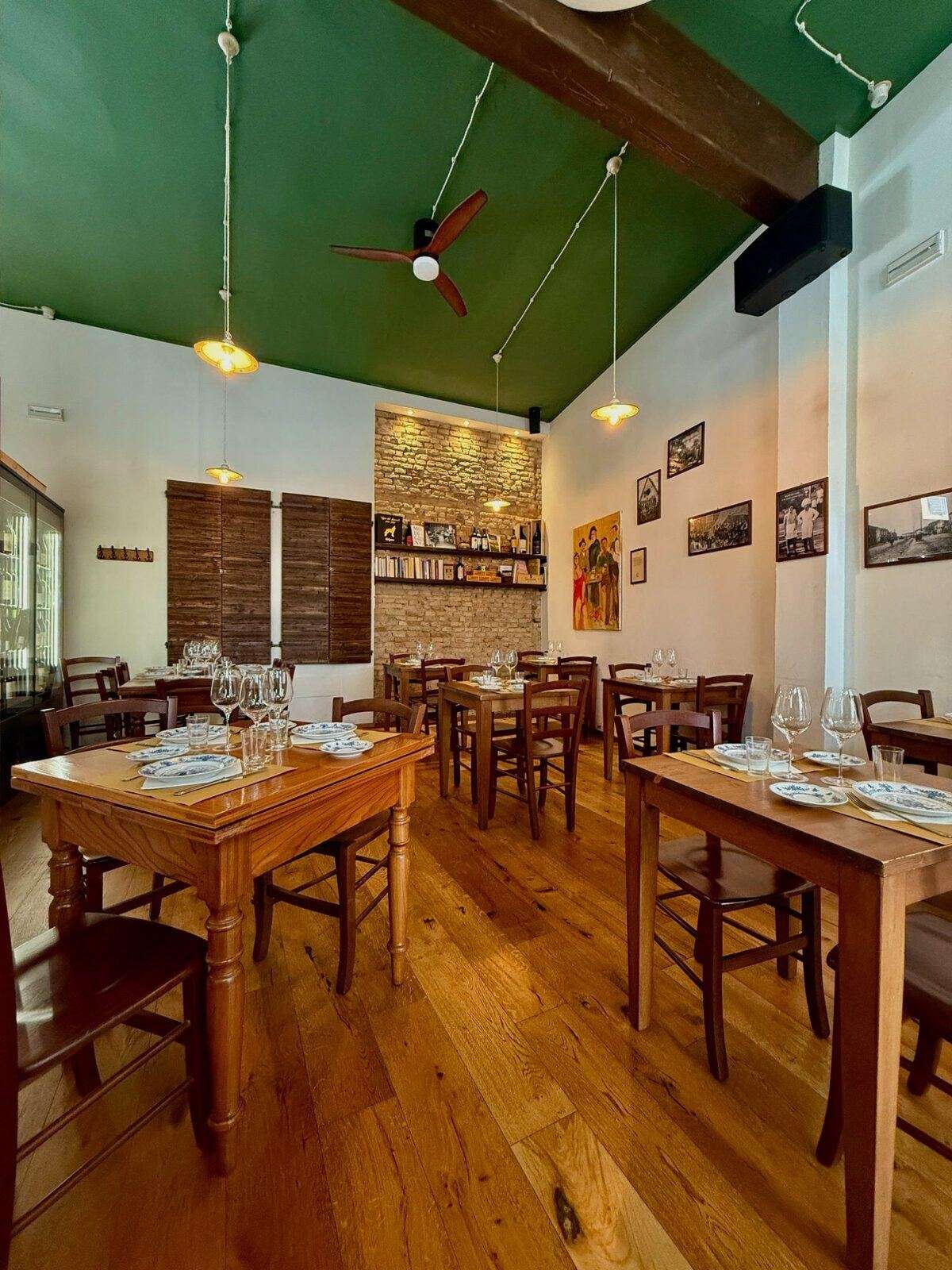
Ravenna’s most reliable address for traditional Romagnola cooking is Osteria dalla Zabariona, in Via Giuliano Argentario 19 — 200 metres from the Basilica of San Vitale and the Mausoleum of Galla Placidia. The osteria holds the Slow Food recognition (listed in the Osterie d’Italia guide 2022—2026) — and the Gambero Rosso 2 Gamberi 2026 rating. The kitchen focuses on dishes that are almost impossible to find elsewhere: Sucialesta, Curzul, Urciòn, cappelletti made daily from Mora Romagnola. The wine list is 100% Romagnola independent producers.
→ Book a table at Osteria dalla Zabariona
Markets and local products
Ravenna’s Mercato Coperto (covered market) in Piazza Andrea Costa is the best place to find local products: squacquerone, piadina, Mora Romagnola cured meats, seasonal vegetables and local honey. Open Tuesday to Saturday mornings. For wine, some of Ravenna’s small wine bars stock FIVI Romagnola producers that are not distributed elsewhere. The area around the city — particularly the Ravenna hinterland and the Delta del Po — is also excellent cycling country, with farmhouses and roadside stalls selling direct-from-producer Sangiovese, Albana and honey.
Practical tips before you eat
Most osterie in Ravenna’s historic centre require a reservation, especially on weekends and during the summer tourist season (June–September). The best Romagnola kitchens tend to have limited covers and do not keep tables indefinitely. For lunch, arriving without a booking between Tuesday and Friday is generally possible; for dinner and Saturday lunch, always book in advance. Ravenna’s historic centre is a ZTL (restricted traffic zone) — come on foot, by bike, or park at the nearest garage (Garage Centrale, 75 metres from Zabariona).