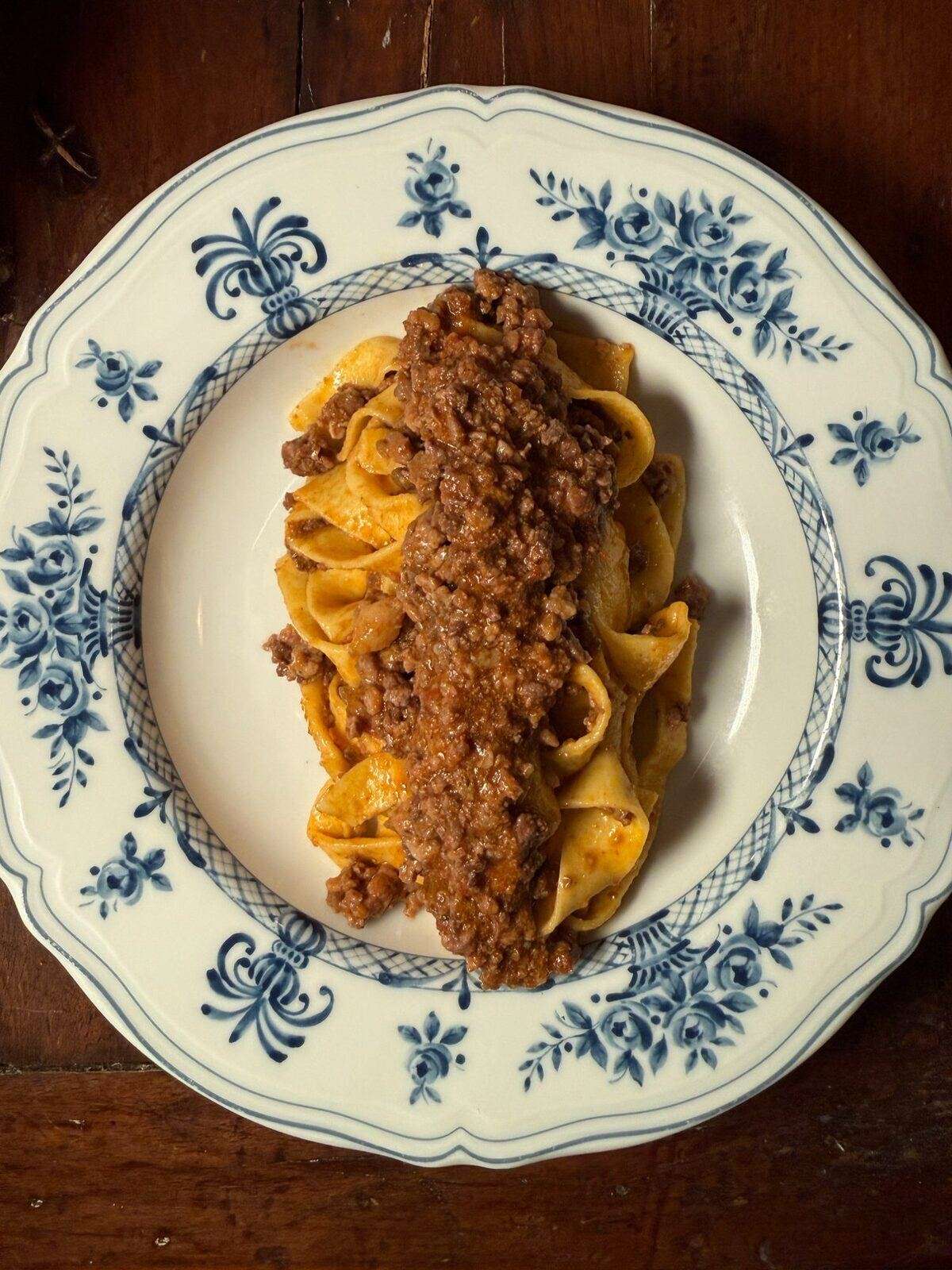
Romagnola cuisine is one of Italy’s great regional cooking traditions, yet it remains among the least known outside the Romagna itself. It lacks the media profile of Bolognese or Tuscan cooking, but it has something neither of them has: an intact peasant root, a rare food biodiversity, and a figure — the azdora — who transmitted techniques and recipes across centuries without ever writing them down. This page is an encyclopaedic guide to Romagnola cuisine: its history, signature dishes, protected products, wines and traditions.
What is Romagnola cuisine
Romagnola cuisine is the gastronomic tradition of Romagna — the geographical area covering the provinces of Ravenna, Forlì-Cesena, Rimini and part of Bologna. It is distinct from Emilian cuisine in territory, ingredients and technique: while Emilia is defined by cured meats and aged cheeses, Romagna is defined by fresh pasta made by hand, native pig breeds, the flatbread called piadina, and a winemaking tradition based on indigenous varieties almost unknown outside the region. The two traditions meet in Bologna but do not mix.
Fresh pasta in Romagna
Fresh pasta is the backbone of Romagnola cuisine. Unlike Emilian pasta (often made with 00 flour and eggs only), Romagnola pasta uses coarser local flours and varies considerably in shape and filling from town to town. The main formats are:
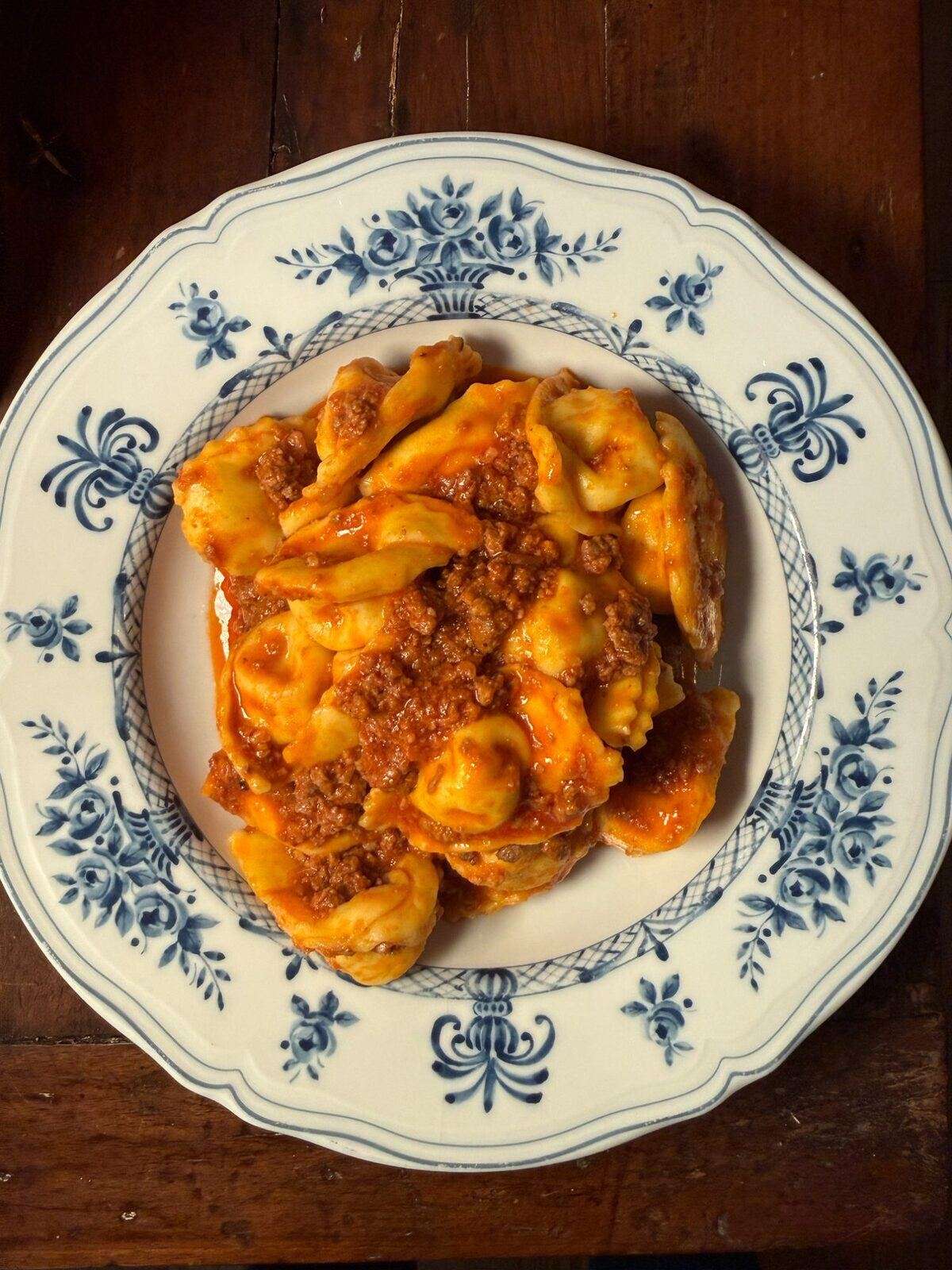
Cappelletti — the definitive Romagnola fresh pasta. Hat-shaped parcels of dough filled with meat (pork, veal, Parmigiano), served in broth or with ragù. Different from Emilian tortellini in shape (more open) and filling. In Ravenna, cappelletti are traditionally made with Mora Romagnola — a native pig breed rescued from near-extinction.
Passatelli — pasta made from breadcrumbs, Parmigiano Reggiano and eggs, pressed through a perforated iron into a rich broth. One of the most distinctive pasta formats in Italy: not rolled or cut, but extruded. The broth — traditionally from paganelli fish — is inseparable from the dish.
Garganelli — egg pasta tubes rolled on a ridged board. A festive pasta, served with ragù or prosciutto and peas.
Urciòn — a giant fresh pasta parcel stuffed with a lean filling (ripieno di magro). A Ravenna speciality, almost impossible to find outside the city.
Protected products of the territory
Romagna has an unusual density of IGP and DOP products — protected designations that map directly onto the cooking of the region.
Mora Romagnola — a native black-coated pig breed of the Romagnola Apennines. Almost driven to extinction by industrial farming; now a Slow Food Presidium. Its meat is significantly more flavourful and marbled than commercial pork.
Squacquerone DOP — a soft, almost liquid fresh cheese. The canonical filling of piadina romagnola. Mild, slightly tangy, deeply tied to Romagnola culinary identity.
Scalogno di Romagna IGP — an elongated shallot grown between Forlì-Cesena and Ravenna. Sweet and aromatic; the defining ingredient of Curzul pasta.
Riso IGP Delta del Po — rice grown in the Po Delta UNESCO wetlands. Used in Ravenna for risotto.
Piadina Romagnola IGP — flat wheat bread made with lard and salt. The daily bread of Romagna. Exists in a thin Rimini version and a thick, soft Cesena-Ravenna version.
The wines of Romagna
Romagna has a distinct wine identity built on native varieties that predate modern viticulture. The main grapes are:
Sangiovese di Romagna — the red grape of Romagna. Fruitier and less tannic than Tuscan Sangiovese, with a pleasantly bitter finish. The natural pairing for ragù-based pasta.
Albana DOCG — Italy’s first-ever DOCG (1987). A white grape producing dry, semi-sweet or passito wines with notes of apricot and almond.
Trebbiano di Romagna — a dry, food-friendly white. Light and clean, excellent with fish and lighter pasta dishes.
Pagadebit — a rare native white whose dialect name means “pays the debts”. Light and floral, made by a handful of organic FIVI producers.
Famoso — a nearly extinct white variety, being revived by Romagnola natural winemakers. Fragrant, low-alcohol, expressive.
Cagnina di Romagna — sweet, lightly sparkling red made from Terrano grapes. An autumn wine, traditionally drunk with roasted chestnuts.
The figure of the Azdora
The azdora — from the Romagnola dialect for “the one who governs the home” — is the central figure of Romagnola culinary tradition. She was the keeper of the pasta-making techniques, the broth recipes, the preserved meat methods, the seasonal rhythms of the kitchen. She did not write things down: knowledge was transmitted orally and practically, mother to daughter, across generations. When the azdora figure began to disappear with urbanisation in the 1960s and 1970s, entire dishes disappeared with her. Much of what Osteria dalla Zabariona serves — including Sucialesta and the Urciòn — was recovered from the handwritten notebooks of the last generation of azdore in the Ravenna countryside.
How to recognise an authentic osteria
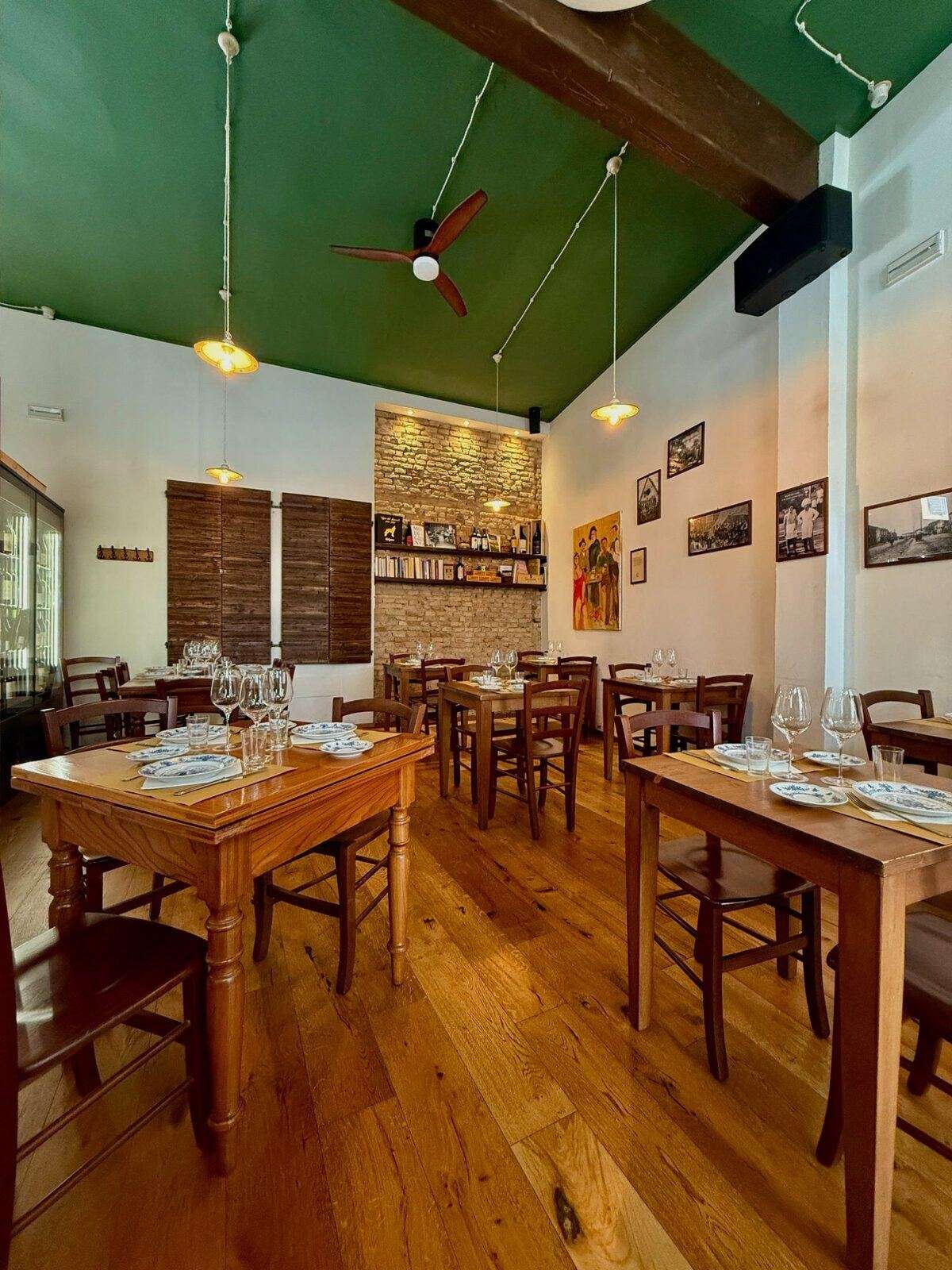
In Romagna the word osteria is not just a category of restaurant — it is a statement of intent. A genuine osteria serves handmade pasta, uses local and seasonal ingredients, keeps a wine list built on regional producers, and maintains a price point accessible to the neighbourhood. The signs to look for: fresh pasta made daily on the premises, dialect names on the menu, a wine list with Romagnola labels you cannot find in supermarkets, a room where you feel you could stay for hours. The signs to avoid: frozen pasta, international wine lists, menus translated into five languages before anyone has ordered.
In Ravenna, the address that most consistently meets these criteria is Osteria dalla Zabariona — listed in the Slow Food Osterie d’Italia guide 2022–2026 and Gambero Rosso 2 Gamberi 2026, two hundred metres from the Basilica of San Vitale.